
Anonymised composite case study
This case study combines recurring patterns from distressed technology programmes. It does not identify a single client, supplier or individual.
A major transformation had missed several milestones and consumed increasing management attention. Each delay produced another recovery plan. The programme remained active, suppliers remained mobilised and governance continued to approve short-term extensions while waiting for the next plan to restore confidence.
The problem
The organisation was assessing whether the programme could keep moving, not whether its intended outcome remained achievable and worth the remaining cost, time and disruption.
Sunk cost and public commitment distorted the decision. Stopping felt like failure, while continuing appeared to preserve the possibility of success. In reality, continuation without a credible viability case exposed the client to further cost while reducing the time available for alternatives.
What the evidence showed
- The target outcome had changed, but the business case and acceptance measures had not been reset.
- Recovery dates depended on unresolved assumptions rather than demonstrated delivery rates.
- Critical dependencies sat outside the authority of the programme plan.
- Commercial milestones rewarded activity that did not always represent accepted value.
- Technical debt and workaround volume were increasing future operating cost.
- Business readiness was compressed each time technical delivery moved.
- Governance received new dates but no independent test of the assumptions behind them.
The programme had motion, expenditure and reporting. Those facts did not establish viability.
The assurance intervention
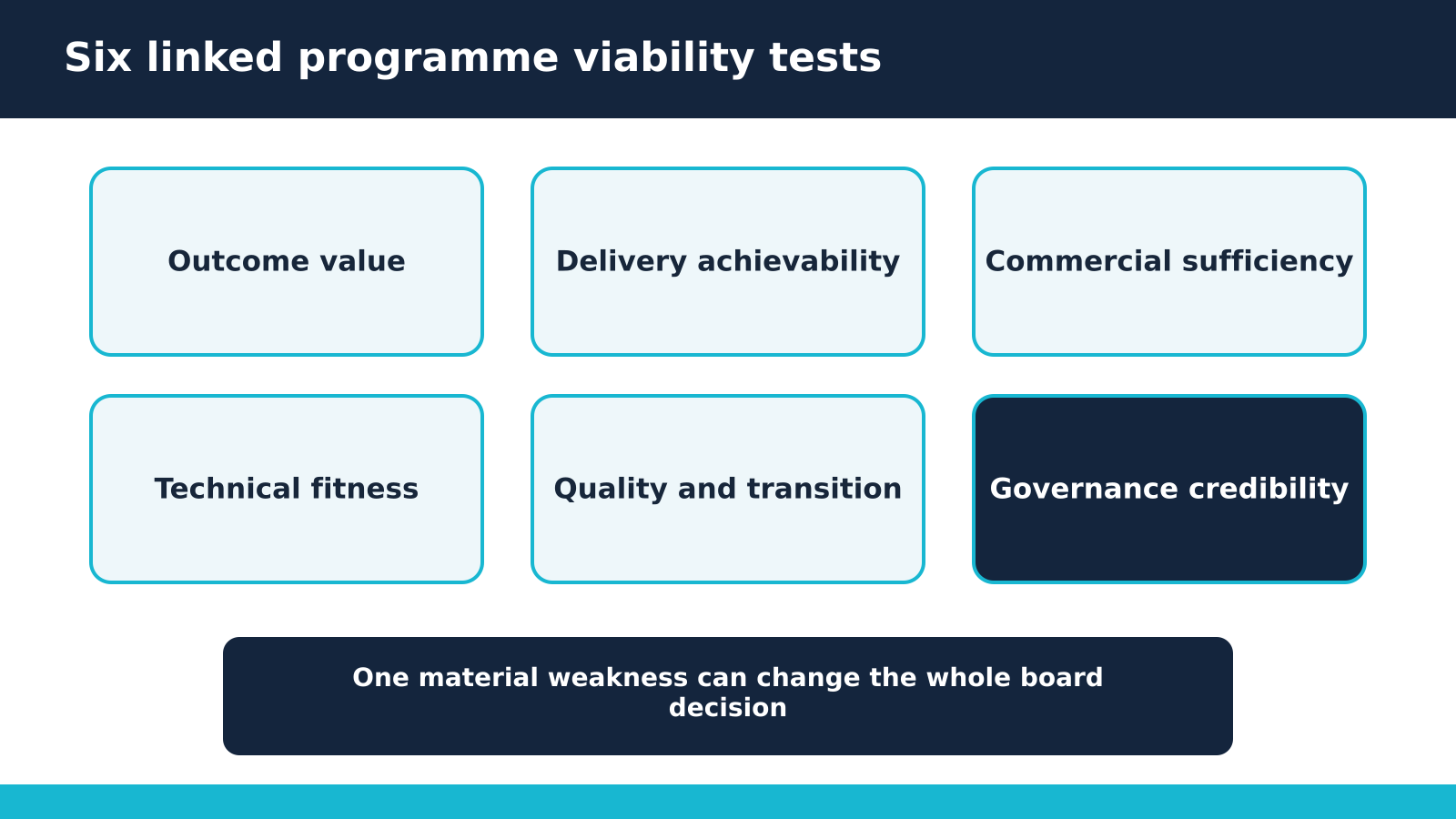
Enigma reframed the decision around six dimensions: outcome, delivery, commercial position, technical integrity, transition feasibility and governance control.
The review:
- Restated the minimum acceptable outcome and tested whether it remained achievable.
- Separated committed cost from future discretionary exposure.
- Compared recovery assumptions with demonstrated throughput, defect behaviour and dependency performance.
- Assessed whether the technical route could support the intended operating model without disproportionate debt.
- Tested business transition, service continuity and adoption constraints alongside system delivery.
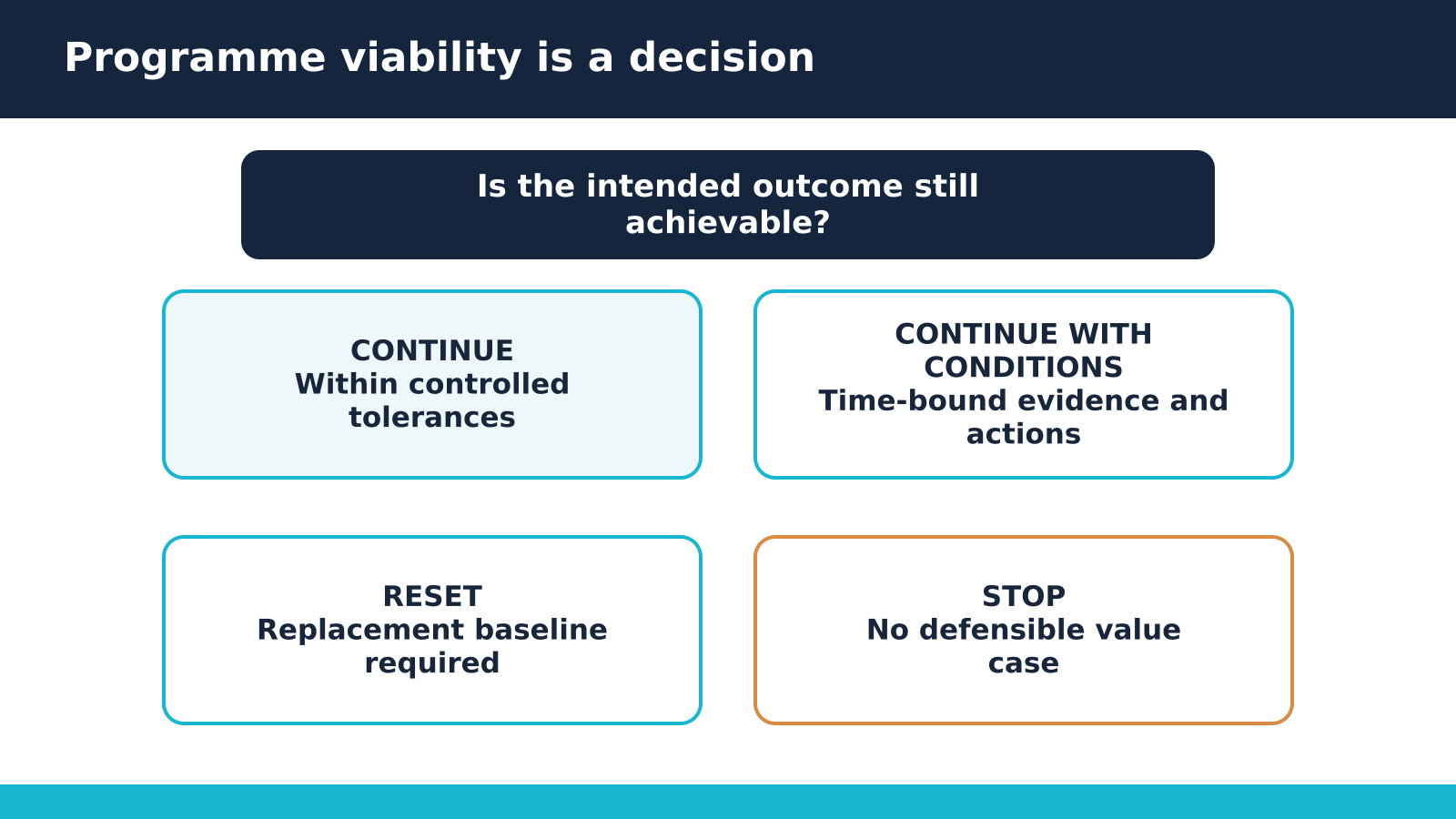
- Defined four legitimate outcomes: continue, continue with conditions, reset or stop.
What changed
The board stopped approving isolated recovery plans and considered the programme as an investment decision. Historical spend was treated as sunk. The relevant question became whether the remaining commitment was justified by the achievable outcome and the alternatives available now.
Optimistic assumptions were converted into conditions that required evidence. Dependencies without accountable control were exposed. Technical and operational consequences were brought into the same decision view as schedule and cost.
The review also protected governance from a false binary. Continuing unchanged and cancelling entirely were not the only options. A controlled reset could narrow scope, change sequencing, renegotiate obligations or establish a different delivery route.
The outcome
The organisation gained a defensible basis for deciding whether to continue, reset or stop. Confidence no longer depended on the existence of another plan. It depended on evidence that the plan addressed the causes of failure, operated within real constraints and could still deliver an outcome worth the remaining exposure.
The lesson is uncomfortable: keeping a programme alive is not the same as protecting value. Delay in confronting viability consumes money, management attention and alternative options.
Enigma provides programme health checks and recovery assurance. We establish what remains viable, what must change and what evidence should govern the next commitment.