
Independent assurance is multidisciplinary. Programme confidence cannot be established through testing evidence alone, nor through programme reporting without technical scrutiny.
Enigma’s practitioner profiles describe senior delivery professionals rather than named biographies. The disciplines are informed by experience across public and private-sector technology delivery, including the recurring conditions that allow programmes to succeed and the control failures that cause them to deteriorate. Engagements are assembled around the client decision and risk profile, not around a fixed consulting pyramid.
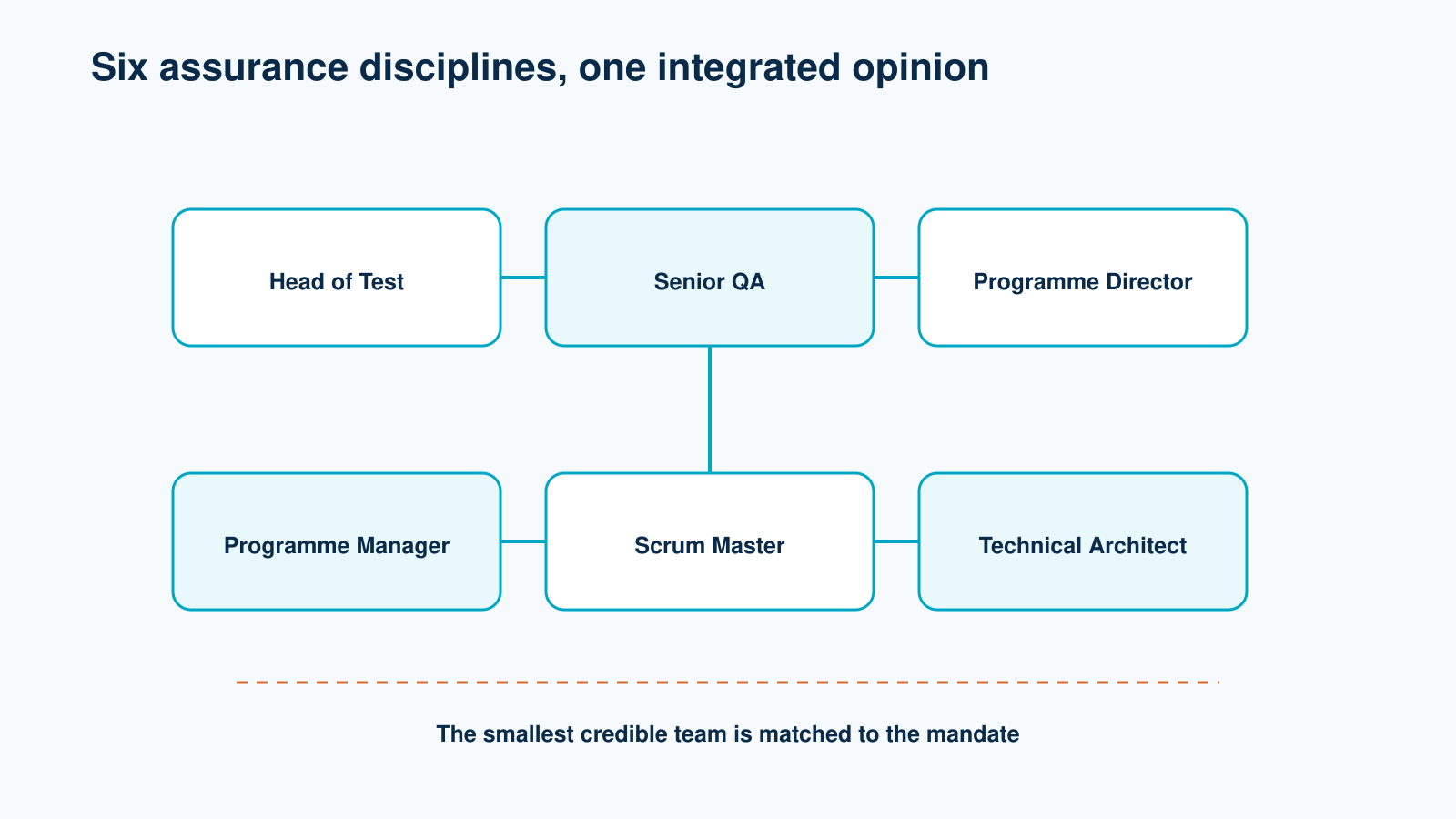
Senior assurance disciplines
Head of Test
A senior test-leadership discipline shaped by public and private-sector delivery experience. It examines quality strategy, lifecycle controls, supplier testing, business acceptance, defects, migration, cutover and operational readiness. It recognises that programmes tend to fail when activity is mistaken for evidence, exit criteria are softened to preserve dates, supplier testing debt is pushed into client phases or defects are considered individually rather than as cumulative exposure. It supports decisions on phase entry, acceptance, go-live and residual quality risk while remaining independent of any testing it directly owns.
Senior QA
A senior quality-assurance discipline focused on the integrity of the evidence beneath programme reporting. It examines traceability, coverage, environments, test data, execution records, defect behaviour and acceptance conditions. Recurring failure patterns include weak traceability, unrepresentative test conditions, unsupported pass results, hidden coverage gaps and defect closure that does not remove the underlying risk. It supports evidence-sufficiency and readiness decisions without independently assuring controls or evidence the practitioner directly created.
Programme Director
A senior programme-leadership discipline bringing public and private-sector delivery judgement to viability, governance and recovery. It examines whether the outcome remains worthwhile and achievable, whether governance receives an accurate account of reality, whether forecasts are credible and whether recovery changes the underlying delivery system rather than simply moving dates. It supports continue, conditional-continue, reset and stop decisions while remaining separate from any programme direction it directly owns.
Programme Manager
A senior programme-control discipline focused on whether commitments are integrated and executable. It examines plans, milestones, dependencies, resources, RAID controls, decision latency and recovery commitments. It recognises that programmes often fail at the interfaces between workstreams, where ownership is fragmented, dependencies are assumed rather than evidenced, milestones represent activity rather than completed outcomes or recovery relies on unsupported capacity. It supports delivery-confidence and recovery decisions without assuring plans or controls the practitioner directly manages.
Scrum Master
A senior agile-delivery discipline used where team-level reporting must be translated into programme-level confidence. It examines flow, impediments, definition integrity, dependencies, quality integration and forecast credibility. It recognises that velocity, completed tickets and well-run ceremonies can create false confidence when outcomes, technical debt, defects, integration or release readiness remain unresolved. It supports release and delivery-confidence decisions while keeping independent assurance separate from ceremonies or team controls the practitioner directly facilitates.
Technical Architect
A senior architecture-assurance discipline informed by complex public and private-sector technology delivery. It examines architecture decisions, integration, data movement, non-functional requirements, security, resilience, operability, technical debt and change constraints. Recurring failure patterns include design assumptions that sit between suppliers, non-functional obligations left until late delivery, temporary exceptions becoming permanent exposure and technically coherent solutions that do not fit the client’s operating model. It supports design, testing, migration, cutover and acceptance decisions without independently assuring architecture the practitioner directly designed.
What experience contributes to assurance
Experience matters because many programme failures are not novel. They recur in different technologies and sectors: evidence trails weaken, accountabilities blur, supplier reporting becomes more confident than the underlying position, dependencies are accepted without closure evidence, defects or technical debt are normalised, decision latency compresses later phases and fixed dates begin to drive the interpretation of readiness.
Successful programmes tend to show the opposite characteristics: explicit decision rights, credible integrated planning, transparent supplier obligations, testable acceptance criteria, representative evidence, timely escalation, controlled exceptions and governance willing to change course when the evidence no longer supports the plan.
How evidence becomes an assurance opinion
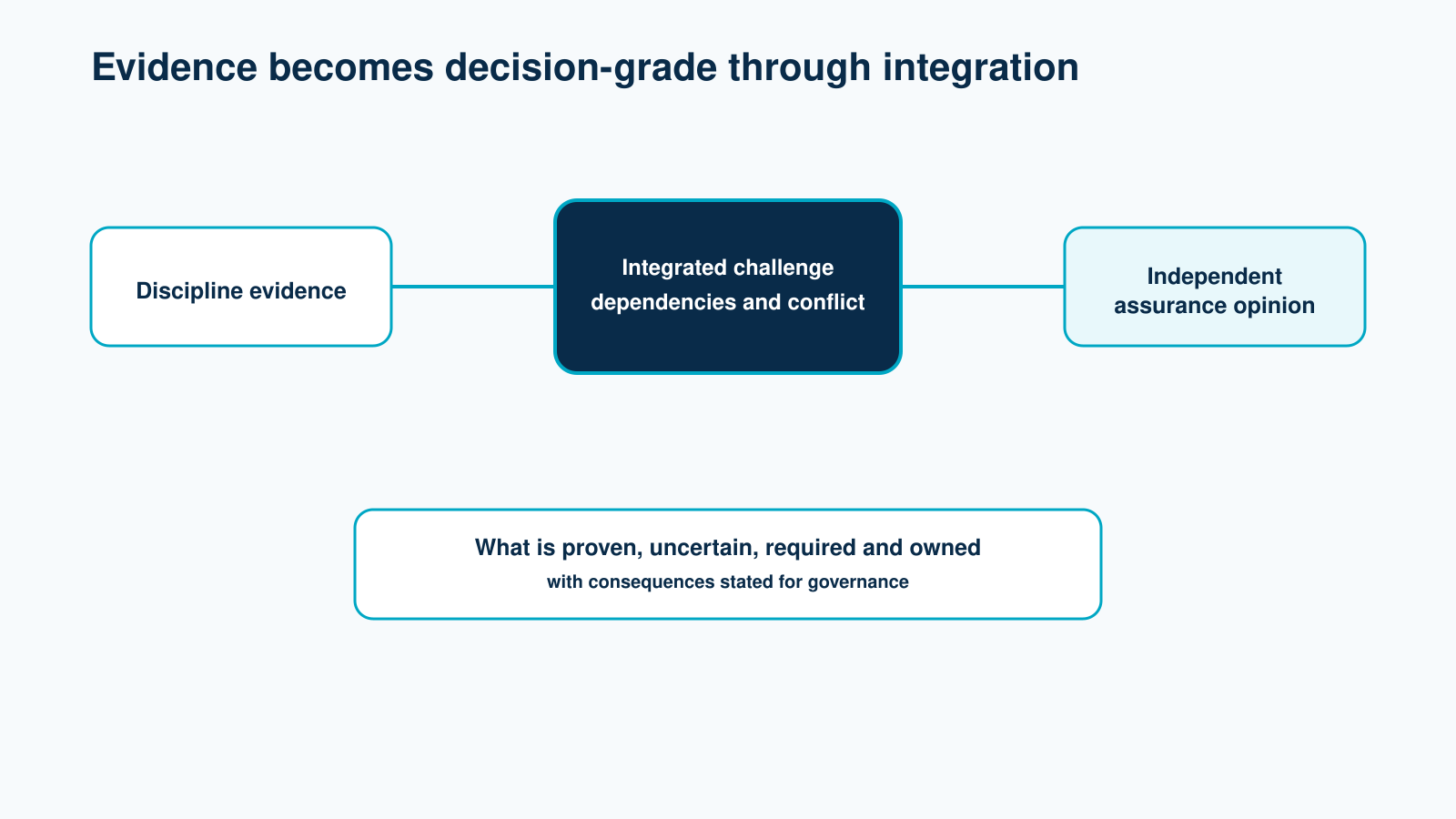
Specialist evidence is not reported as six disconnected workstreams. The assurance lead integrates cross-cutting dependencies, contradictory evidence, ownership gaps and cumulative exposure. Governance receives one coherent position that distinguishes:
- what has been demonstrated;
- what remains uncertain or untested;
- which controls have failed or are absent;
- what action is required and who owns it;
- what consequence follows if the client proceeds;
- what conditions must be verified before confidence can increase.
The smallest credible team
Not every engagement needs every discipline. A focused quality review may require a Head of Test and Senior QA practitioner. A programme viability or recovery review may require programme, delivery, architecture and quality judgement. The mandate determines the team, and exclusions are made explicit.
No marking our own homework
Enigma will not present delivery work performed by an engagement resource as independently assured by that same resource or reporting line. Where a practitioner has contributed to delivery, that area is excluded from their assurance scope or assessed through a separate independent route. This boundary is defined in the Independence and Conflict Standard.
Explore our Advisory Services, understand how we work or commission an independent review.